

Turning sustainability reporting into a tool for transformation

Hannah Nascimento
Sustainability DirectorPwC’s Global Sustainability Reporting Survey shows that sustainability reporting is increasingly delivering real value, helping organisations uncover insights and identify opportunities for improvement. Hannah Nascimento highlights how these practices are driving transformation and turning compliance into a strategic advantage.
Sustainability reporting has never been so valuable.
With CSRD, IFRS and the upcoming UK SRS all forcing organisations to ask harder questions, those questions are now driving real transformation.
The sustainable compliance and business transformation agendas have never been so close together.
And while challenges and uncertainty remain, for the first time, they’re pulling in the same direction.
At Luminous, we don’t just help you write and design great sustainability reports. We help you get ready for what’s next.
Because when done well, the reporting process can:
- Expose strategic, data and governance gaps
- Surface opportunities for improvement
- Create a narrative that builds internal alignment and momentum
- And, yes – can often act as the ‘stick’ that gets things moving
It’s a powerful tool for progress. And the value is clear:
PwC’s Global Sustainability Reporting Survey 2025 found that 70% of organisations reporting under ISSB or CSRD whether voluntarily or not — gain significant or moderate value from the data and insights collected through reporting.
We help clients unlock that value even further through:
- Materiality assessments that actually surface what matters most
- Regulation and compliance readiness reviews so you know what’s missing
- Sustainability and ESG strategy development that closes gaps fast and unlock progress
Best practice reporting that informs, engages and inspires
The reporting process can do much more than meet the rules. It can also fuel transformation.
For more information on how we can help you unlock all that’s possible from reporting and fuel your progress, get in touch with Hannah Nascimento.




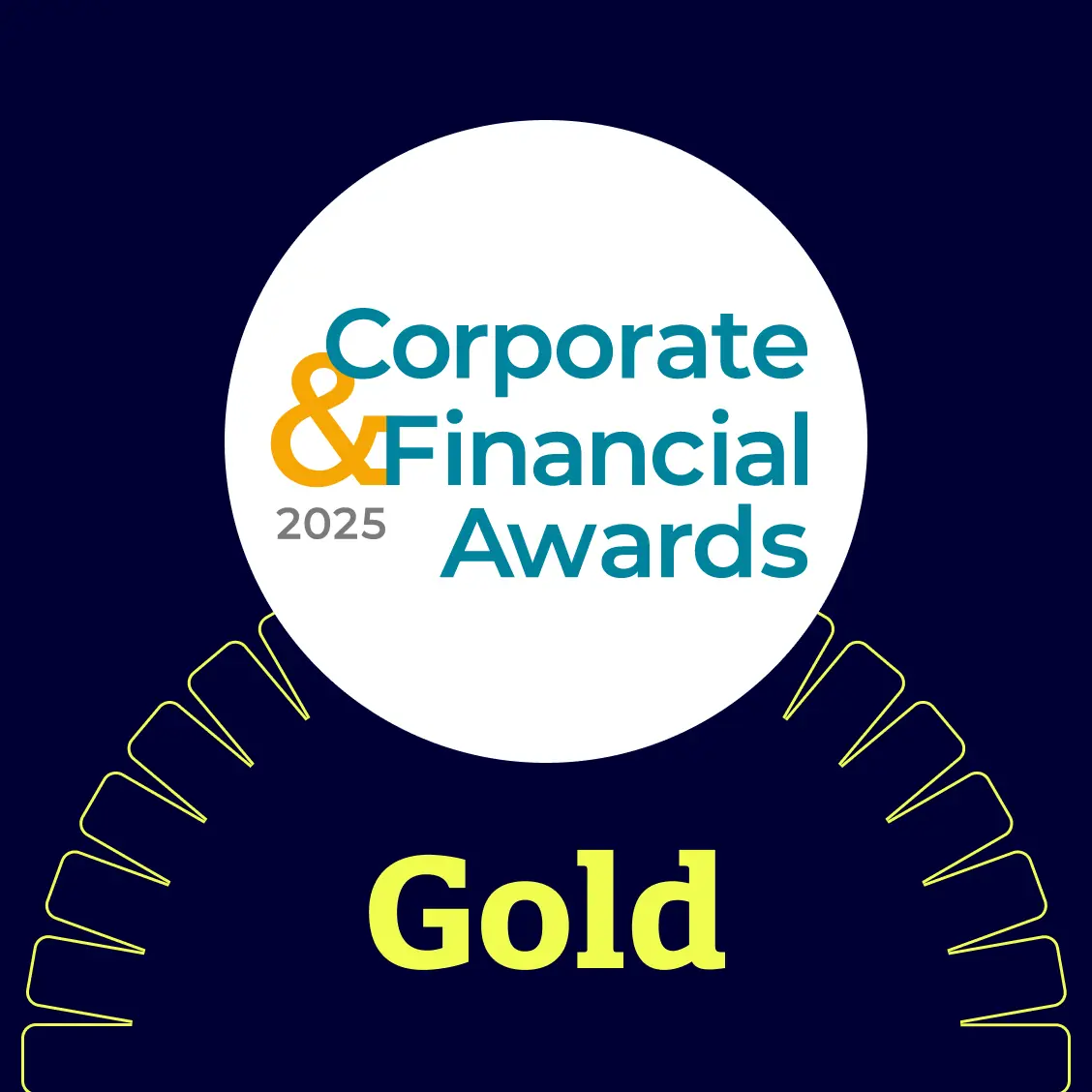

Celebrating innovation and award-winning work at the Corporate & Financial Awards
It was an honour to see our work celebrated at this year’s Corporate & Financial awards – a moment that not only recognises the craft behind each project, but also highlights the themes shaping the future of corporate reporting.
Judges spotlighted our strengths in storytelling, transparency and pioneering use of AI — all areas we’ve invested in deeply as we help clients communicate with greater impact.
Here’s a look at our award wins:
Gold
Informa — Best Online Report (FTSE 100)
Judges commented: “An innovative step forward in the use of AI in annual reporting.”
Coca-Cola HBC — Best Integrated Report
Judges commented: “Always a strong, balanced report with clear forward-looking commentary, balanced with transparency around progress.”
Silver
Legal & General — Best Printed Report (FTSE 100)
Judges commented: “This reinvention was impressive, and praised the clear, compelling storytelling.”
Legal & General — Best Use of Copy
Judges commented: It was “clean, clear and a great report. Easy to read and, more importantly, very easy to digest.”
PPHE Hotel Group — Best Online Report
Judges commented: “Slick, impactful, easy to navigate to key information but took you on a journey.”
Bronze
The Crown Estate — Best Integrated Report
Judges commented: “Some of the best case studies we’ve seen.”
Legal & General — Best Online CSR/ESG Report
Judges commented: “Strong factual reporting telling a clear and powerful story about what is relevant to this company and its key stakeholders as well as its investors.”
Informa — Best Use of AI
Judges commented: “This was an innovative step forward in the use of AI in annual reporting.”
If you are interested in finding out more about our award-winning work or want to discuss how we could support your next project, get in touch with us today.






Staying the course in a changing CSRD landscape

Hannah Nascimento
Sustainability DirectorOn 13 November, the European Parliament Plenary voted again on the Omnibus I file – the legislative package proposing simplifications to the Corporate Sustainability Reporting Directive (CSRD) and the Corporate Sustainability Due Diligence Directive (CSDDD).
In a significant political shift, the European People’s Party (EPP) formed an alliance with far-right parties to weaken the EU’s sustainability framework, marking the most coordinated move yet between centre-right and far-right factions on this agenda.
The outcome represents a setback for sustainable and accountable policymaking in Europe, with amendments including:
Raising the CSRD reporting threshold to 1,750 employees and €450 million turnover, resulting in a reduction of ~92% of companies that were originally within scope of the CSRD.
Thresholds for CSDDD have also been raised to 5,000 employees and revenues of over €1.5 billion. Those below the scope will be protected from requests by companies for information greater than that set out in voluntary sustainability reporting standards. Additionally, companies covered by the CSDDD are directed to rely on information that is already available, instead of systematically requesting information from smaller value chain companies, and to only request additional information from their smaller business partners as a last resort.
Under CSDDD reference to climate transition plans was also stripped away and while those that have them still need to publish them under the CSRD, there is no requirement to implement them
Removing civil liability provisions and the review clause intended to revisit them.
Next, the file moves into trilogue negotiations between the European Commission, the Parliament and the Council of the EU
For companies, and many of our clients, these ongoing shocks and changes raise one clear concern: clarity. And probably one clear emotion: fatigue. After all, unpredictability is the antidote to competitiveness, performance and focus.
The reality on the ground
However, what we must not lose sight of is that many Wave 1 businesses have already reported, and others are well advanced in their preparations to apply the European Sustainability Reporting Standards, demonstrating their committed to improving comparability, reliability and accountability in their ESG management and performance.
Whether forced to or voluntarily deciding to ask themselves the questions prompted by regulation such as the CSRD and CSDDD, leading businesses, IR and sustainability teams recognise that the costs of inaction far outweigh the cost of implementation, and that investors are increasingly expecting reliable, decision-useful sustainability information to guide capital allocation and stewardship.
This also makes competitive sense with research showing that businesses that excel in financial growth, profitability, and ESG (“triple outperformers”) deliver up to 7% higher annual total shareholder return (TSR) than those excelling only in financial metrics.
In addition, the ESRS is also explicitly designed to align with global standards such as IFRS S1/S2 and meshes with broader frameworks such as the updated Science Based Targets initiative (SBTi) and emerging net-zero guidance, creating a clearer line of sight from implementation to reporting.
There is also no doubt that the CSRD, and other regulatory frameworks, has been quietly rewriting the rule book on what best practice ESG reporting looks like, shifting the norms from glossy overview of activity to a rigorous reflection on performance and long-term risks and opportunities.
No time to slow down
Even as the rules appear lighter on paper, CSRD expectations for traceability, auditability and data confidence remain as stringent as ever. For businesses with complex, multi-tier supply chains and significant climate risks, asking the hard questions is crucial to remain resilience and viable into the future.
In amongst all the chaos, it’s also easy to forget that the push for robust reporting was never just about compliance.
In its 2025 survey, PWC found that “more than two-thirds of companies that have already reported under CSRD or ISSB say they gained significant or moderate value, beyond compliance, from the data and insights collected during the reporting process. Those seeing the most value are most likely to be using the insights in areas such as overall business strategy, supply chain transformation, workforce transformation, marketing and risk management.”
While simplification and proportionality are vital, rigour and comparability are equally essential if we want investors, regulators and society to trust the numbers and reward credible progress.
So, what now?
Well apart from waiting to see what’s happens next, we should continue to focus on the opportunity of creating value and delivering decision useful information through reporting.
Because whether the rules tighten or loosen, the organisations that treat sustainability as a strategic capability, not a compliance cost, will be the ones that stay ahead.
Sound like the support you need right now? We can help you cut through the chaos and strengthen your sustainability reporting. Get in touch.


A new chapter for Luminous

Justin Boucher
Managing DirectorWhen Luminous was founded back in 2002, our mission was clear – to be the most creative agency in corporate communications and reporting. Creativity was our heartbeat then, and it still is today.
But over time, we’ve evolved. Our clients’ worlds have become more complex, their challenges more multifaceted, and the impact of their decisions more visible. In response, we’ve evolved into a broader strategic advisory and creative studio, designed to help organisations cut through complexity, stand out, and make a lasting impact.
We’re proud to unveil our new identity – one that reflects who we’ve become and where we’re heading next.
“Rebranding Luminous has been about rediscovering who we are and where we can make the biggest difference for our clients. It’s a reflection of the expertise, creativity, and care that define our team.”
Justin Boucher, Managing Director, Luminous
The journey to this point hasn’t been quick or easy. We wanted to treat our own rebrand with the same curiosity and rigour we give our clients, asking the big questions about who we are, what we stand for, and what makes us different. It’s been thoughtful, sometimes messy, and deeply rewarding – exactly the kind of process we guide our clients through every day.
Our proposition
We’re living in a world that doesn’t stop moving. Strategies shift, expectations rise, and markets evolve overnight. Our clients face the challenge of doing more, saying more, and proving more — all at once.
Our new proposition ‘Defining what matters. Creating what counts.’ captures how we’re partnering with clients to meet these challenges.
By defining what matters, we help business focus on what sets them apart, where they can lead, and how they can influence action.
And by creating what counts, we bring that focus to life through smart strategy and standout creative that sparks impact.
This thinking guides everything we do, across reporting, sustainability, brand, and digital. Whether we’re:
- Delivering corporate and B2B brand transformations that unlock growth
- Crafting reports that not only meet changing regulations but deliver value and shift perceptions
Or helping businesses define and shape their sustainability strategy and communications
…it all comes back to one thing: helping clients spark real impact, where it counts.
A refreshed visual identity
Our new visual identity builds on our heritage while looking firmly ahead.
The Luminous yellow remains untouchable; it’s our spark, representing the energy and optimism we bring to every challenge. Our new brand graphics, made up of ‘impact sparks’, represent the collective expertise and the meaning of our work. And our new logo, our most radical change, introduces a bold new typeface and takes direct inspiration from those sparks.
We’re excited about what’s ahead. New leadership, fresh perspectives and a refreshed offering mean we’re ready for a new chapter of growth and impactful work.