
Brand
08/09/20263 mins read
How brand mascots create deeper emotional connections

Laura Caughey
Design DirectorThink about the last time you saw a meerkat on your TV and immediately knew it was a car insurance ad. Or spotted a stripey tiger on a cereal box from across the supermarket aisle. You didn’t need to read a single word. That’s the magic of a great brand mascot.
At its simplest, a mascot is a character that represents a brand – an animal, a person, a cartoon or something completely made up. It gives a brand a personality that’s often more memorable than a logo.
The Michelin Man (real name Bibendum – a fun fact for your back pocket) has been going strong since 1894. Captain Birds Eye first sailed onto UK screens in 1967. Tony the Tiger joined the party in 1952. These characters have outlasted generations of ad campaigns, CEOs and marketing trends.
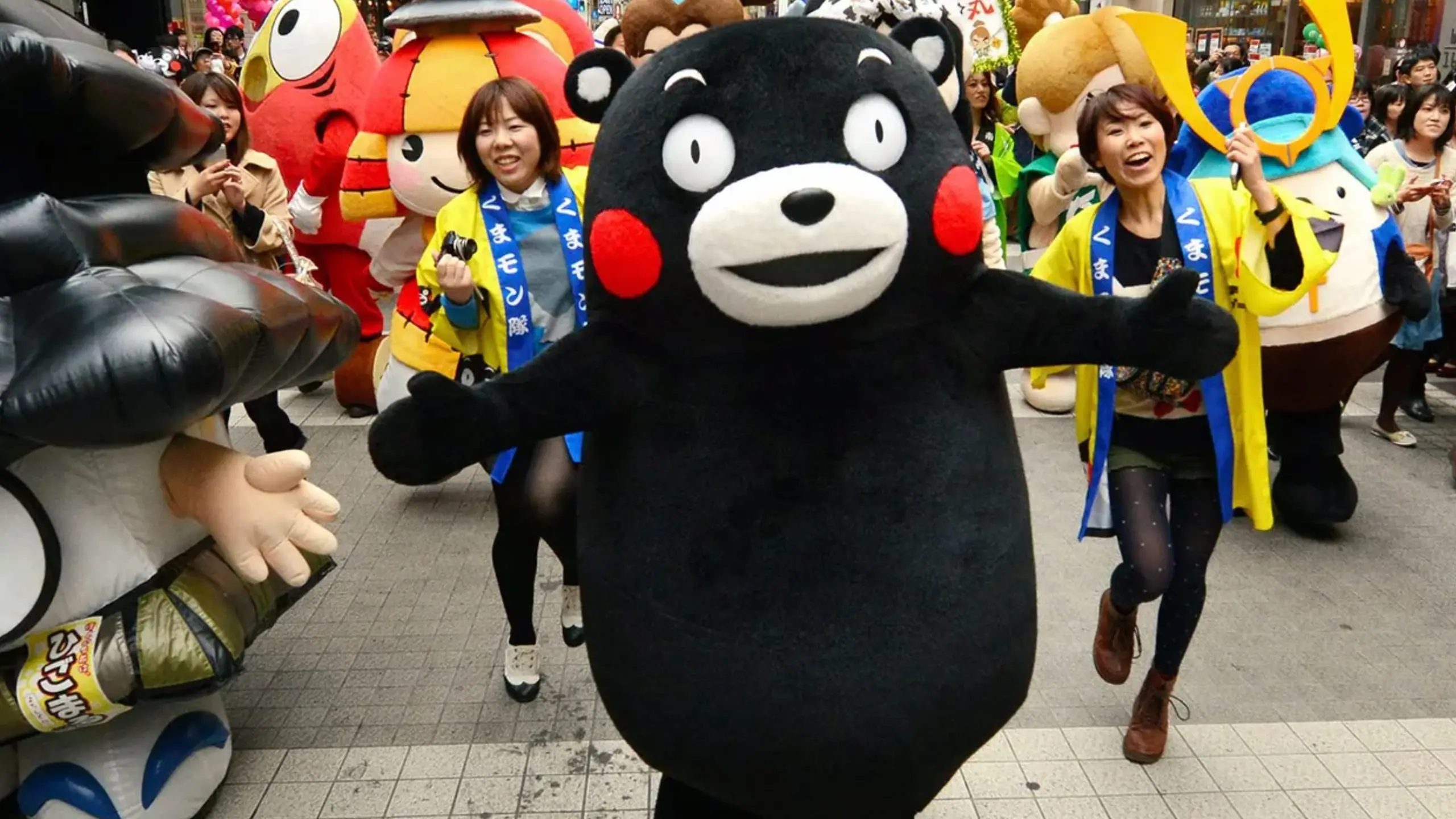
In Asia mascots aren’t a novelty – they’re serious economic drivers and cultural icons. Japan treats mascot performance as a legitimate craft with dedicated mascot schools and a ‘mascot economy’ employing thousands. Characters represent products, services and even places, such as ‘Kumamon’ the bear created to boost tourism and civic pride in Kyushu.
Why do they work?
Humans are wired to connect with faces and characters. When we see a mascot, our brains engage the same social instincts we use with real people. Researchers call this anthropomorphism.
The numbers back this up. A 2021 study by the Moving Picture Company found that “long-term campaigns featuring mascots delivered a 41% increase in market share gain” versus 29.7% for campaigns without them. System1’s four-year study of Super Bowl adverts found a similar pattern: Ads featuring a brand character scored an average of 3.8 stars, against 2.7 stars for celebrity-led ads, alongside short-term sales impact and 88% brand recall.
The benefits:
They’re memorable. Characters stick in our minds in a way that abstract logos don’t. You can describe the Compare The Market meerkat to someone who’s never seen the ad.
They show emotion. Warmth, humour, confidence or reassurance – things a font or logo can’t convey as directly.
They make brands feel human. In cold or complex industries like insurance, finance or tech, a mascot softens the offering. This is one reason why chatbot characters are becoming more popular with AI and tech companies.
They carry stories. A mascot can run across multiple campaigns and years and still feel familiar. That consistency builds trust.
Case study: Duolingo's owl
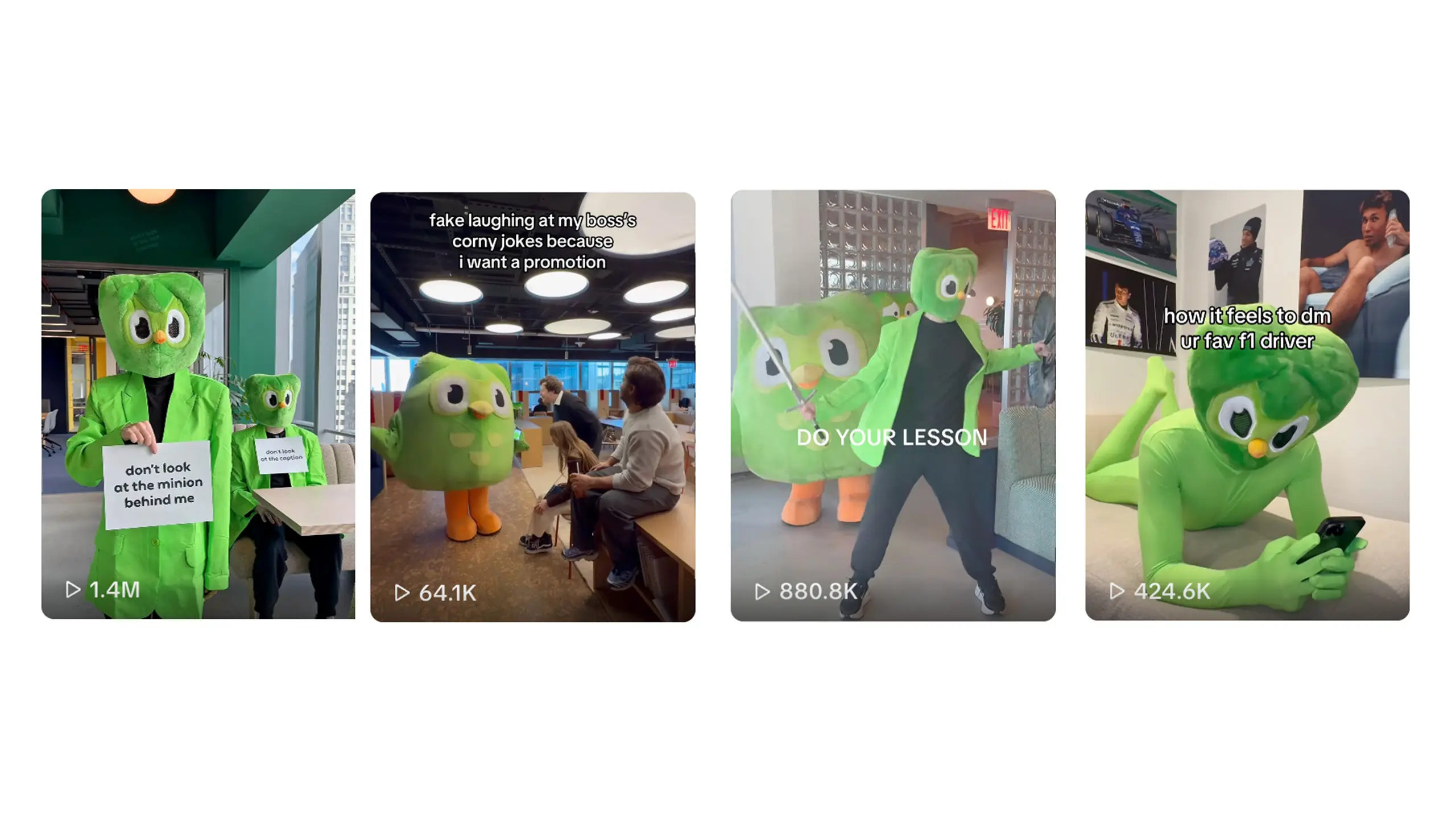
Duo is a masterclass in modern mascot strategy — a full-blown internet personality built through memes, unhinged TikTok content and the running joke that he really wants you to do your Spanish lesson. It’s self-aware and it works: the mascot isn’t just a logo, it’s the brand’s entire social presence.
B2B mascots are an underrated opportunity
LinkedIn B2B Institute found that inspiring emotion in B2B ads is six times more effective than delivering rational benefits alone – yet most B2B brands still lead with spec sheets. Mascots are one of the most underused tools for closing that gap.
Successful B2B brands don’t use mascots for the sake of it. They’re doing a specific job: making complex, intangible products feel approachable and human. A character turns dry specs into a story that hits home, and builds the kind of familiar, trustworthy feeling that helps risk-averse buyers feel more comfortable making a decision.
Successful B2B brands don’t use mascots for the sake of it. They’re doing a specific job: making complex, intangible products feel approachable and human. A character turns dry specs into a story that hits home, and builds the kind of familiar, trustworthy feeling that helps risk-averse buyers feel more comfortable making a decision.
Case study: Doxi
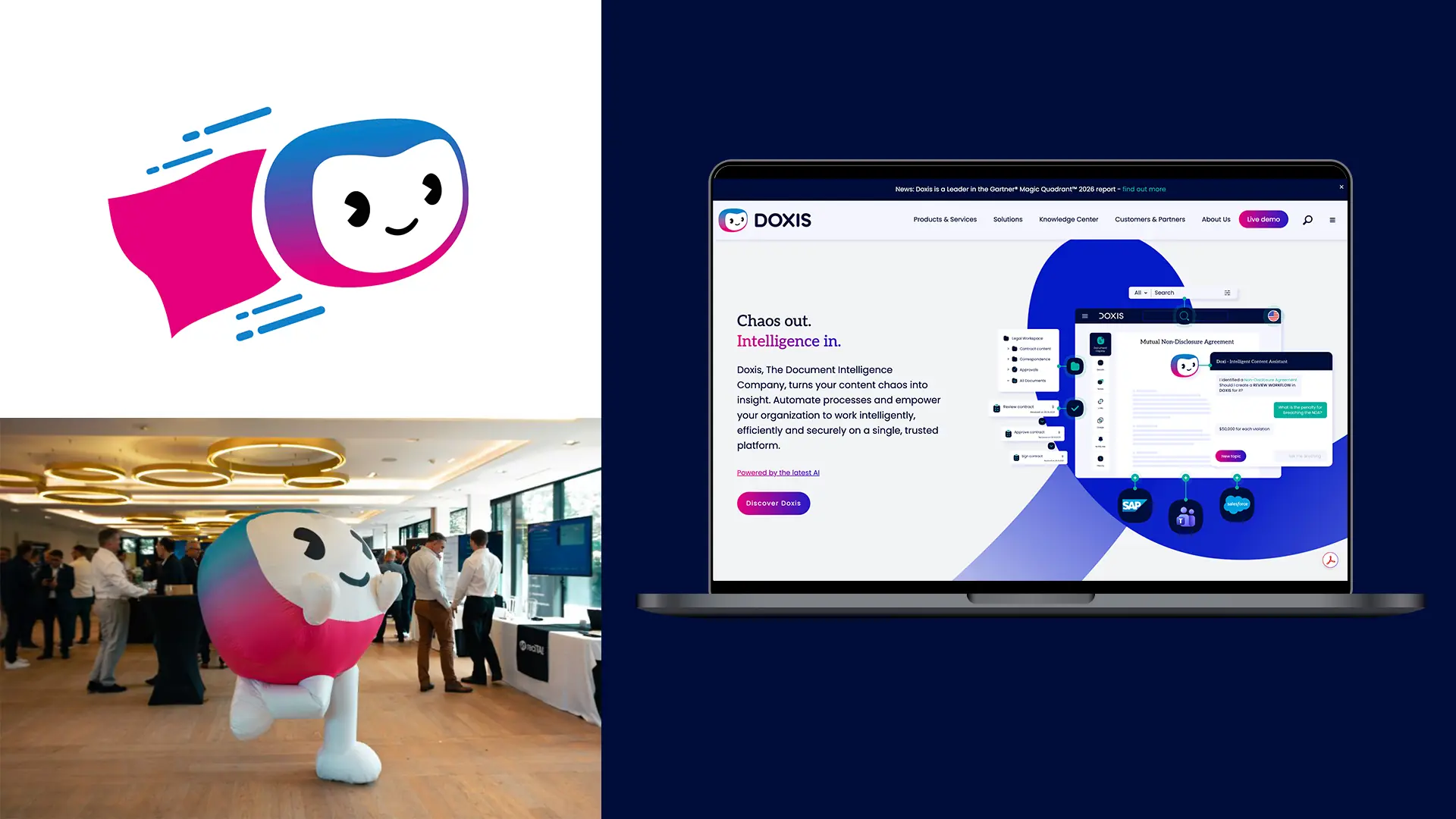
Our work with Doxis shows what this looks like in practice. Through primary research, we uncovered the cultural importance and brand equity already built into their mascot, Doxi. We elevated the character front and centre and built a practical visual identity toolkit around it – new logo, colour palette and typography – so the whole system worked together coherently.
How to create one
Start with identity, not aesthetics. Get clear on what your brand stands for and who you’re talking to before you think about what the character looks like. The mascot has to embody those things, not just look cute.
Ask your audience. Tony the Tiger was chosen through consumer research – real feedback before committing saves a lot of pain later.
Play the long game. The market share data comes from long-term campaigns. A mascot is a strategic commitment, not a one-season trial.
Design for flexibility. A great mascot isn’t a single image – it’s a character that holds up across formats, sizes and contexts. Pringles’ 2021 rebrand gave Mr. P a full range of facial expressions, including an agonised face for spicy flavours, showing how modern mascots are built as flexible systems, not fixed images.
Build for platforms, not just print. Mascots can now do more than sit on packaging. AR, AI chatbots and personalised animation let them move, speak and respond to individual users – Duolingo’s owl is the clearest example, driving the brand’s entire social presence rather than just appearing in ads.
Attention is scarce and everyone’s shouting. A mascot is how you get remembered — and liked – instead of just seen. Want to find yours? Let’s talk.




Loading...