

How to make your annual report work for investors and AI

Stephen Butler
Reporting DirectorOn 11 February, Luminous hosted a 30-minute webinar featuring Stephen Butler, Reporting Director, and Paris Mudan, Senior Reporting Consultant, exploring how to make annual reports more effective for both investors and AI readers.
About the event
AI is already shaping how investors analyse and compare companies, and corporate reports are a key input. In this practical session, Stephen and Paris shared how reports are being interpreted by AI tools today, what that means for investor decision-making and steps you can take to ensure your reporting performs in an AI-driven environment.
Key takeaways:
How investors are using AI to assess companies and surface insights
What “AI-ready” digital reporting looks like in practice
Practical ways to structure your annual report so it’s readable, searchable, and usable by AI
Insights from a live Q&A with our experts
Resources:
For any follow-up questions or to learn more about our Lumina AI Chat and Review tool, please get in touch with stephen.butler@luminous.co.uk.







Why private equity firms should care about brand

Anna Tugetam
Brand DirectorPrivate equity firms use many strategies to drive value in their portfolio companies. But one they often overlook is brand. It’s a powerful lever, but, if neglected, it could risk leaving money on the table.
Let’s start with the facts first:
- A McKinsey & Company study revealed that brands with strong reputations generate 31% more return to shareholders than the MSCI World average.
- In another study, it finds that fast-growing companies spend more than slower companies on intangible assets such as brand. It concludes that companies that master intangibles investment are well positioned to outperform their peers.
- Strength of brand/marketing is the factor most frequently cited by analysts (79%) when asked how they appraise and analyse companies, compared with leadership quality (76%) and technological innovation (72%).
A strong, consistent brand is one of the most powerful levers for increasing perceived and actual business value. This means that private equity firms should prepare their portfolio companies’ brands with the same attention as their balance sheets.
But, in practice, how can a strong brand help?
By providing clarity: A strong brand helps you be crystal clear on who you are, what you do, who you do it for and why. It helps you reach the customers you chose to serve and helps investors understand your value and the space you occupy in the market.
By creating distinctiveness: A strong brand is distinct and therefore recognisable and memorable. B2B brands especially benefit from having a strong brand as it provides them with a powerful differentiator in the minds of target audiences compared with just talking about features and benefits.
By aligning teams: When your brand isn’t clear and inspiring, every bit of growth demands more effort. When it’s not aligned, it’s like mud, dragging down momentum and slowing progress. But with clarity on your vision and who you are, employees can align, trust is built, decision making can be streamlined and you move faster and smarter.
We have helped several private equity firms rebrand their portfolio companies to set them up for growth. We have brought clarity and focus to seemingly disparate brand portfolios, and we’ve transformed brands from quiet presence to leaders.
Faria – Shaping the future of EdTech
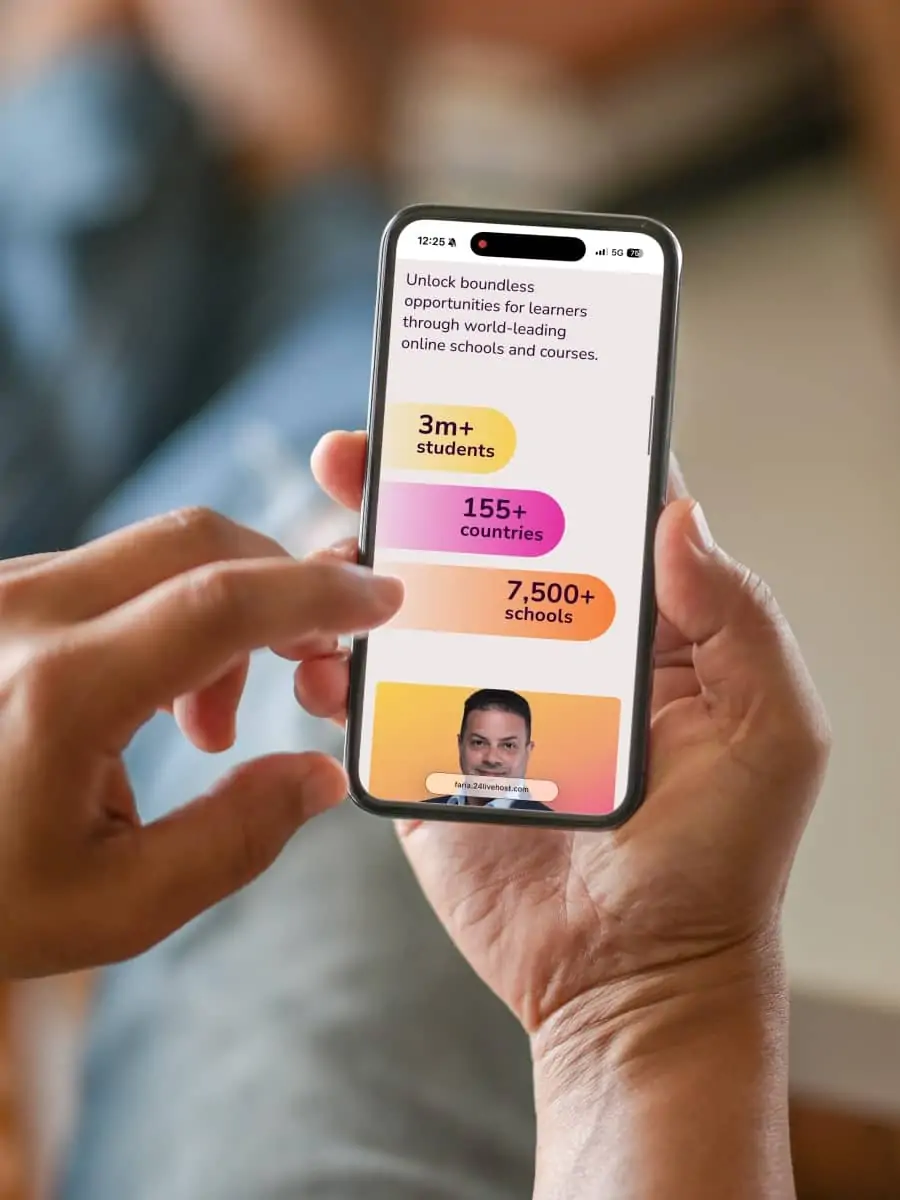
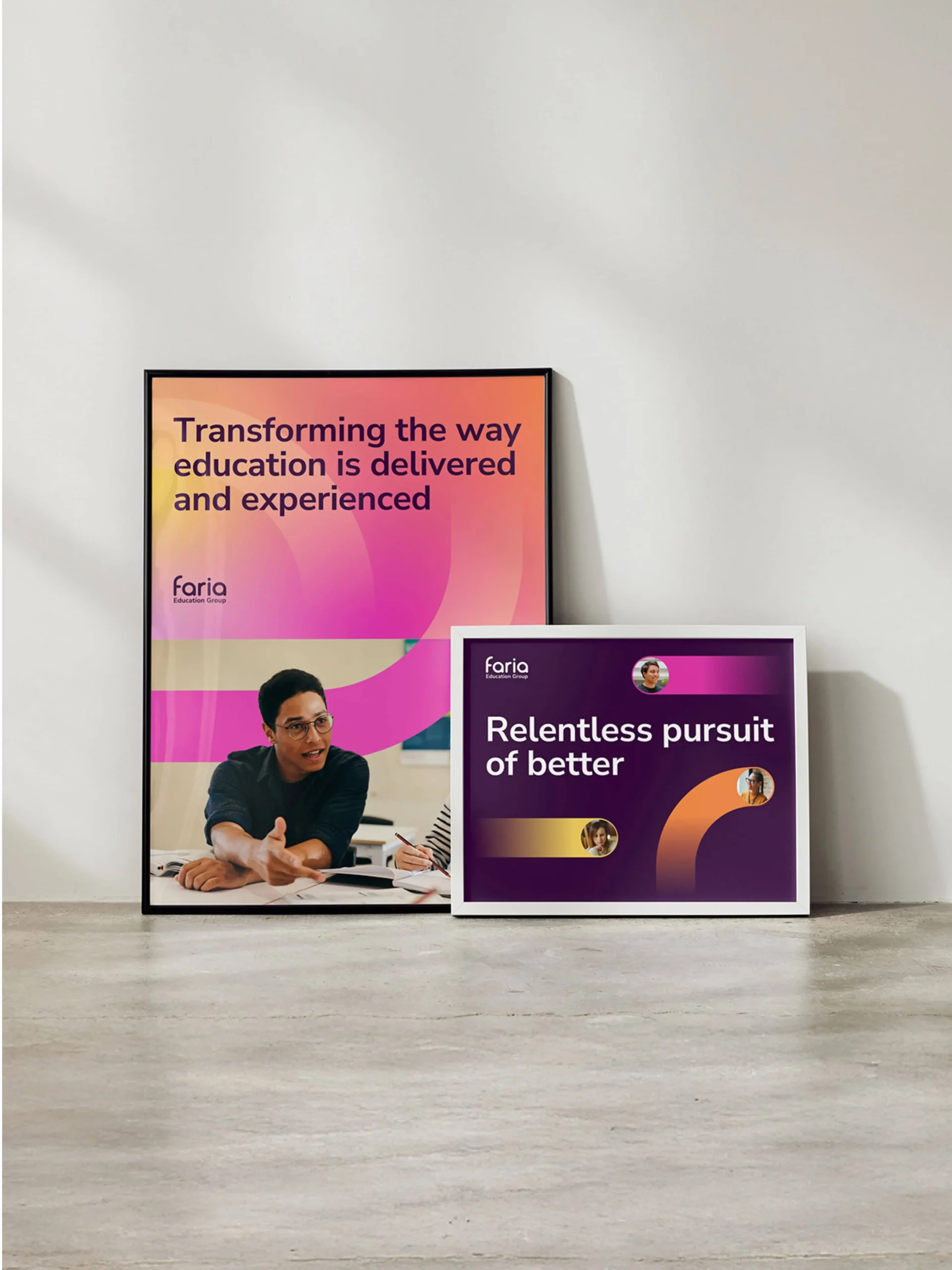
We recently helped Faria Education Group, a global leader in EdTech, to reimagine its brand and create a unified identity across its product portfolio. Through extensive stakeholder consultation and competitor review, we developed a bold, clear positioning: The relentless pursuit of better. The new brand creates standout in a competitive category and pride and belonging internally.

Hubexo – Driving global growth
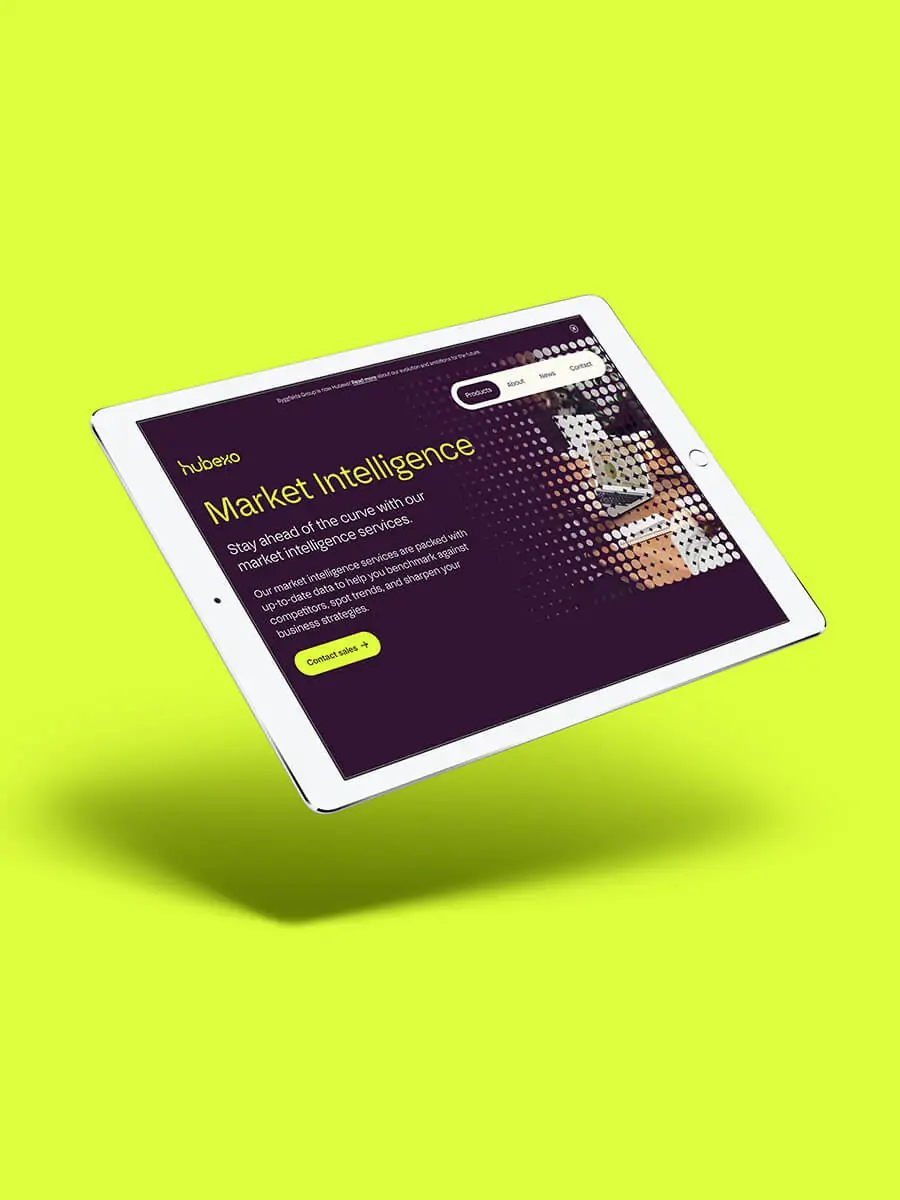
When Byggfakta Group transitioned from public to private ownership with ambitious growth plans, it needed to unify under one single brand to replace a fragmented portfolio of over 60 regional product brands. We developed a new name (Hubexo), a simplified brand architecture going from 60+ product brands into five core areas, and a new visual identity built around the concept of connection and growth.
Brand is often overlooked as being ‘fluffy’ when in fact it’s the foundation for success. The evidence tells us that, if you’re preparing your business for investment or sale, you can’t afford to ignore your brand.
If your portfolio company’s brand isn’t where it needs to be to ensure future success, then you should take a closer look at it.
Contact us for a 30-minute free consultation.
Sources:
https://www.mckinsey.com/capabilities/tech-and-ai/our-insights/five-fifty-the-invisible-edge
IPA/Brand Finance Investment Analyst Survey






Luminous expands Client Services team with senior hires

Justin Boucher
Managing DirectorWe are delighted to announce two key additions to the Luminous Client Services team, as Simon and Lucy join us on our agency’s growth journey.
Lucy Smaill joins Luminous as Client Services Director.
Lucy brings a wealth of experience, having previously led the Client Services team at Given. Her approach is client-centric and people-first, with a strong focus on agile problem solving and long-term partnerships. Lucy has worked with major clients, including John Lewis, Lloyds Banking Group, the National Trust, Kimberly-Clark and Pernod Ricard.
“Stakeholders expect more from communications than ever, and what drew me to Luminous is the way they combine creativity with insight to stay ahead of that challenge. They deliver work that feels both imaginative and grounded in real value, and I’m looking forward to bringing my own focus on people-centric client service into the mix.”
Simon Hutley joins Luminous as Senior Client Director, bringing 19 years of experience at Radley Yeldar. Simon has a proven track record in client leadership, strategic account management, and delivering high-impact projects across multiple sectors, having worked with Barclays, Ferguson, GPE, IHG and Vivo Energy. At Luminous, Simon will play a pivotal role in strengthening client partnerships and guiding strategic delivery.
“I’m thrilled to be joining Luminous, and I look forward to supporting our clients with strategic insight and delivering solutions that make a real difference.”
“Bringing in Simon and Lucy marks an exciting step forward for Luminous. They each bring deep expertise, bold thinking and a shared passion for delivering real impact for our clients. Their experience will help us continue to push boundaries and deliver industry-leading levels of client service and quality.” Justin Boucher, Managing Director, Luminous
For more information, please contact our Senior Marketing Manager, Matilda Paterson.


How brands in workspace and facilities management need to evolve
Anna Tugetam
Purpose, Brand & Culture DirectorWith technology, sustainability and private equity reshaping workspace and facilities management, brands face a new set of challenges. In our guide, we reveal how to turn them into opportunities.
The UK’s workspace and facilities management industry is going through significant change.
Businesses are increasingly turning to technology solutions, including AI, and data to enhance their facilities management. They are also focused on designing a human-centred workplace experience to create a competitive advantage for talent attraction and retention. And with sustainability high on the agenda, companies are looking to optimise their spaces to reduce their carbon footprint.
Private equity investment is also reshaping the landscape. In 2024, 54% of deals in the sector were backed by private equity, up from 36% in 2022. Investors are starting to see the significant potential in this fragmented market.
These shifts are not only redefining how spaces are managed, but also how brands need to evolve to remain relevant.
Facilities managers play an integral role in supporting an organisation’s goals, such as attracting and retaining talent, and implementing decarbonisation plans. A new type of leader is emerging – one that is digitally fluent, forward-thinking and understands the power of facilities management in achieving business success.
“Workspace and facilities management companies must rethink how to remain relevant and capture the attention of customers. To do so, they will need to re-evaluate their brand and communication.”
That’s where our latest guide comes in.
We outline four strategic imperatives every workspace and facilities management brand should act on now to seize this new era of opportunity.
Download our full guide here




CSRD in flux: From burden to opportunity – or a slow fade?

Stephen Butler
Investor Engagement and ESG Director2025 is proving to be a watershed year for the Corporate Sustainability Reporting Directive (CSRD). Timelines have shifted, the rules are being rewritten, and the tone is changing from rigid prescription to pragmatic proportionality.
There are three big signals from Brussels:
- Stop-the-clock delays – large companies in Wave 2 now start in 2028, with listed SMEs following in 2029.
- Quick fix for early reporters – Wave 1 gets a year’s breathing space on tricky disclosures like anticipated financial effects.
- Two new proposals from EFRAG – simplified SME standards and European Sustainability Reporting Standards (ESRS) 2.0 amendments for everyone else.
Together, they mark a pivot from burden to balance. The question is: can companies use this flexibility to build better sustainability programmes – or will we see ambition quietly shrink?
Full CSRD compliance was always going to be a big ask for SMEs. The new ESRS LSMEs draft offers a lighter, more proportionate path:
- Five core modules: general info, environment, social, governance, business conduct
- Simplified materiality assessment
- Optional extras and phased requirements
- 50% lower estimated cost than full ESRS
It’s open for consultation until November. The final version lands in 2026. It’s voluntary – unless your regulator or your largest customers tell you otherwise.
ESRS 2.0: less grind, more grip
After one year of pain points, EFRAG has listened. ESRS 2.0 pares back the complexity while keeping the rigour. We welcome the intent: moving away from disclosure-as-box-ticking and towards reporting that reflects how businesses actually think about sustainability.
The highlights:
- Top-down materiality – start with what you know matters, skip the exhaustive bottom-up trawl
- Granularity cuts – fewer sub-sub-topics, less repetition
- Executive summary option – lead with your story
- Value chain relief – proxies, sector averages, partial reporting allowed
- Integration freedom – put Policies, Actions and Targets alongside your impacts for a coherent narrative
This is where the stakes rise. Used well, these changes free up resources to focus on strategic sustainability. Used badly, they risk hollowing out reports and making year-on-year comparisons meaningless.
The tension is clear: efficiency vs credibility, pragmatism vs ambition.
What to do now
Whether you were in Wave 1 or years away from mandatory CSRD, now is the moment to:
- test your materiality process against the new top-down approach
- identify where flexibility can add clarity – and where it could damage trust
- decide how to use your executive summary to tell a distinctive, credible sustainability story
- engage in the consultation – shape the rules before they’re locked in.
Our take
EFRAG is signalling that sustainability reporting is growing up. It’s now less about ticking every box. It’s more about telling a focused, authentic story. But freedom demands responsibility.
If you use the space well, you can create reporting that works harder for your stakeholders – and for your business.
If you waste it, you’ll be left with a thinner, less convincing narrative in a market that still demands proof.
For further details, please don’t hesitate to reach out to our Director of Reporting, Stephen Butler.
Introducing Lumina: See your report through AI’s eyes
Stephen Butler
Investor Engagement and ESG DirectorWith AI now the first to read your report, how can you ensure your message, data and context are accurately understood?
It is no longer investors, analysts, stewardship teams or journalists who read your report first: it’s AI.
Reports were once designed for a patient, human reader. Today, they must meet the needs of systems trained to distil signal from noise. Stakeholders will not always read; they’ll query, parse and summarise via AI.
From page to prompt, this shift introduces new risks. Your message risks being:
- missed – crucial points are buried or phrased inconsistently, causing AI to fail in surfacing them;
- misinterpreted – lacking context, AI may extract the wrong meaning;
flattened – nuanced messages are reduced to generic summaries, losing impact.
AI does not reason like the human mind; it retrieves, approximates and stops when it believes it has completed the task. If your data and narrative do not meet its parameters, your compelling story may remain sunken and unseen.
When AI responds, your company’s voice merges with everything else it has absorbed from the web. In these fragmented currents, transparency, consistency and clarity become critical beacons.
A strategic decision
The new reality is that disclosure alone no longer guarantees impact. AI is already analysing your report before it reaches human eyes, determining what gets highlighted and what gets overlooked. This isn’t about rewriting for machines, but about ensuring your story survives translation, thriving in systems that extract, rank and reduce.
The new frontier is about telling the same story, structured to resonate for both human minds and machines.
See your report in a new light – Lumina.
Luminous has developed Lumina, a proprietary simulation tool that reveals how your report is interpreted by AI, before your stakeholders read a word.
By mimicking real-world queries, Lumina analyses how AI models respond to your disclosures. It shows what gets retrieved, what gets skipped and how messages are reshaped or diluted. The tool identifies blind spots, gaps and inconsistencies, allowing you to optimise structure, sharpen messaging and improve impact.
The result? A stronger alignment between what you intend to communicate and what your audiences, human or machine, actually take away.
Built on a unique blend of natural language processing, investor and other stakeholder insights, prompt engineering and corporate reporting expertise, Lumina is specifically designed for the complexity of corporate reporting. It ensures that your message is seen, surfaced and understood. No matter who or what is reading.
If you’re ready to make your next report valuable for both minds and machines, we would love to talk!
Our Resetting Reporting: From Disclosure to Value research calls for a shift from fragmented, compliance-led reporting to value-led, digitally enabled narratives – highlighting how AI is not just a tool, but a new stakeholder shaping how disclosures are read, interpreted and trusted. In the chapter From Tools to Transformation, we explore how reporting can evolve into a more connected, resilient discipline – where AI clarity for both humans and machines is key to standing out.


UK sustainability standards: time to test the waters

Paris Mudan
Senior StrategistAs UK SRS moves from voluntary to mandatory, many IROs are asking how to get started. Our Kick Start programme offers a structured pathway to prepare with confidence.
IROs need to ensure that their companies are fully briefed on the new sustainability disclosure standards, which may be voluntary at first, moving to mandatory later.
Three major consultations, launched in June 2025, will form the key components of the government’s programme to make the UK ‘the sustainable finance capital of the world’. At the heart of this intent is the Exposure draft UK Sustainability Reporting Standards UK SRS S1 and UK SRS S2, which is based on the international IFRS standards but has been adapted for a UK context.
The government’s strategic direction is clear: to encourage high-quality, comparable sustainability disclosures that strengthen investor confidence and help support long-term capital flow. While this ambition is bold, a phased approach to adopting these requirements should allow companies to find their footing – making now the right moment to test the waters before the tide of regulation rises. The first phase consists of the following three consultations.
1. Sustainability reporting standards: what’s in scope?
The first government consultation concerns UK SRS S1 and S2. These will mirror the structure of IFRS S1 and S2, which require the disclosure of material sustainability-related risks and opportunities. These disclosures must be made through the company’s annual report, ensuring connectivity with both the financial statements and existing corporate reporting frameworks.
These standards will initially be available for voluntary use, with mandatory adoption likely to be phased in through the Companies Act and FCA listing rules. A regulatory roadmap is promised that will outline the timing, scope and expectations. Six UK-specific amendments are proposed, including:
1. Removing transition relief to prevent compromising the principle of ‘connectivity’ with the financial statements.
2. Extending ‘climate-first’ relief to a two-year period, allowing companies to familiarise themselves before going beyond climate disclosure.
3. Removing mandatory GICS code use to reduce the reporting burden and increase connectivity.
4. Removing fixed ‘effective dates’ to allow regulatory flexibility.
5. Making referencing SASB standards optional, reflecting their lower UK relevance.
6. Clarifying that transition reliefs apply only once mandatory, to avoid penalising early voluntary reporters.
“A phased approach to adopting these requirements should allow companies to find their footing”
These changes aim to balance global consistency with local relevance, without capsizing existing reporting systems.
2. Transition plans: from disclosure to implementation
Alongside the SRS, the government is in consultation about whether large UK companies should be required to publish a 1.5°C-aligned climate transition plan.
The consultations will explore whether transition plans should also cover climate adaptation and biodiversity, and if firms should be held legally accountable for delivery, not just for disclosure.
The third consultation seeks views on whether the Audit, Reporting and Governance Authority (ARGA) should oversee the creation of a new voluntary registration regime for the assurers of sustainability disclosures. The goal is to develop a trusted assurance market, potentially paving the way for mandatory assurance in the future.
CSRD Omnibus update
In April 2025, the EU formally adopted the ‘stop the clock’ proposal, which is part of the EU’s Omnibus package. This proposal gives companies in Waves Two and Three until 2028 to comply with CSRD application requirements.
On June 12th, the European Parliament’s rapporteur presented his draft report on proposed CSRD amendments, reflecting his goal to ‘cut costs for companies and reduce burdens’.
Key changes include:
- Optional climate transition plan reporting. This is required only if a transition plan already exists.
- Trade secrets are generally exempt from sustainability reporting requirements.
- Raising the applicability threshold to 3,000 employees and €450m in net turnover.
- ‘Value chain’ has been replaced by ‘chain of activities’ terminology. Companies may report on a ‘best efforts’ basis when full value-chain information is not available.
The draft will form the basis for the European Parliament’s negotiations towards its final position, which is expected in October, to be followed later by the final policy package.
What IR teams should do now
Although adoption is still voluntary, investor expectations are shifting fast. IR teams shouldn’t delay – they should collaborate early with sustainability colleagues and begin assessing their alignment with UK SRS requirements and the TPT framework to help identify gaps in reporting, build internal readiness and understand where forward-looking disclosures may carry liability risk until safe harbours are in place.
Regarding CSRD, it is worth waiting for updated guidance before conducting a full gap analysis. Companies can still get ahead by starting activities that add value, such as the double materiality assessment, laying important groundwork regardless of the proposed changes and scope.
With over 140 pages of consultation material now available and more to come, one thing’s clear: the tide is turning. Now’s the time to start preparing.
“Companies can still get ahead by starting activities that add value, such as the double materiality assessment”
Find out more about our Kick Start programme and how it can accelerate your UK SRS readiness.
For further details, please don’t hesitate to reach out to our Senior Reporting Consultant, Paris Mudan.


Building a memorable brand: Q&A with Mark Litchfield
At Luminous, we’re known for creating brands that look great, but also work hard and stand the test of time. To unpack what that really means, we sat down with Mark Litchfield, our Executive Creative Director, to talk about what makes a great visual identity, why it matters and how we bring it to life for our clients.
Mark, tell us a bit about your role at Luminous.
“It’s about making sure the creative work we produce aligns with and pushes our clients’ ambitions. It’s not just about making something beautiful; it’s about ensuring every element supports what the brand wants to achieve, while looking for opportunities to go beyond the brief.
Why is visual identity so important for brands, especially in B2B?
“It’s all about instant recognition. A strong visual identity is what stops people scrolling and makes them pay attention. It brings a company’s personality and offer to life, immediately. Think of ‘The Simpsons’: flick through TV channels and you can’t miss them because they look like nothing else. The same idea applies to brands – distinctiveness cuts through.”
Key takeaway: In B2B, where messaging can be complex and competition fierce, a compelling visual identity makes the difference between blending in and standing out. It’s the hook that might get someone to listen to what you have to say.
Can you share some B2B brands you think do this well?
“Consumer brands shook up banking by looking and sounding different – they felt fresh and authentic. In B2B, I think of JTC, one of our clients. Their visual identity genuinely reflects their unique employee-owned model and the creativity they bring to complex portfolio management. It’s distinctive for their sector and connects back to who they really are.”
What makes a visual identity memorable?
It comes down to three big things: authenticity, uniqueness, and consistency.
“Authenticity is key – it comes from looking inward at what your business does well, instead of copying others. Uniqueness naturally follows. And then consistency makes it stick. It’s a simple truth: people inside a business see the brand every day and get bored quickly. But just as they’re tired of it, the outside world is only just starting to notice it. Resist the temptation to tinker too often – consistent application is what builds memorability over time.”
However, consistency doesn’t mean rigidity.
“A brand needs flexibility to adapt to different channels and audiences, but all the pieces should still feel like they belong together. Too strict, and you risk looking repetitive or dated. Too loose, and you lose recognition.”
So how do you develop a visual identity from scratch?
It starts with strategy and understanding where the brand is today and where it wants to go.
“We always balance what’s working now with the ambition for the future. We do a detailed review of what equity the current brand has, whether that’s loyal customer base, recognisable assets, or practical realities like an instantly recognised typeface. We don’t just sweep that away without reason. Then we align that to the new story, positioning and personality the strategy defines.”
Building a brand on these foundations is even more important in an AI landscape. It’s great that companies can now produce things fast. But without a brand strategy or system, it can get messy quickly – inconsistency in visuals and messaging, a disjointed brand experience, all lead to poor engagement.
The bridge between strategy and design is a strong creative idea.
“A good creative idea reveals what a company stands for. It gives people a glimpse of what it’s like to work with that brand – is it playful, bold, reliable? That should come through in every touchpoint.”
Want to know more about our Brand work? Please get in touch.


In the spotlight: Q&A with Ria Jiang

Mark Litchfield
Executive Creative DirectorThis summer, we have been lucky to have Ria join us on an internship in our Design team. We took the opportunity to sit down with Ria and ask them about their internship experience at Luminous and what inspired them to get into a creative role.
Tell us a little about yourself.
I’m Ria, a design intern at Luminous for three months this summer.
What inspired you to pursue a creative career?
I loved painting when I was very young. I studied at a middle school and high school that focused on art. We spent half the day doing drawing. During that time, I realised I had some talent in design. It’s not just about drawing skills, but about logic, layout, and how everything works together. I feel design is more structured than fine art, and I like that. You need to solve problems, and I enjoy this kind of creative thinking.
Which project at Luminous have you most enjoyed working on or are proud of?
I have worked on three kinds of projects at Luminous. First is the Basic project, which helps train your layout and branding skills. Second is the Fun project, where you can be bold and creative and explore different ideas. The last is the Challenge project, which I enjoy the most. It lets you solve real problems and improve yourself.
For example, I worked on animated icons for rebranding our website. It was my first time doing animation, and it was a big challenge for me. But I felt supported by my lovely design team and they always had my back. That made me feel trusted, and I really wanted to do my best. A few days later, there were more icons waiting for me. This time I saw my own progress very clearly, which made me so surprised and happy.
What’s been the most valuable thing you’ve learned during your time at Luminous?
I think I’ve learned not only about design, but also about teamwork, which is something you can’t learn by yourself.
At Luminous, I’ve worked with many different people. Some are very detail-focused and make everything clear and easy to follow. Others are more relaxed and bring a lot of energy, which makes the work fun.
Also, the way we collaborate makes the whole process very smooth. I did another internship before, and I can say Luminous is really well organised. Even though I’m just an intern, I feel like I can have a chance to understand the whole picture and how things work. That makes my learning more complete and helpful for the future.
What advice would you give to others just starting out in the industry?
Go with the flow!
Before, I studied industrial design, even though I liked graphic design more, so I felt a bit stuck and sad.
If I answered this question as the young me, I would say, “Follow your heart and do what you love.” But now, I think that experience in industrial design helped me learn how to think in a system. That’s also very useful in graphic design and branding, too!
So I would say it’s hard to say what’s good or bad. Even something that doesn’t feel right now can help you later. Just go with the flow!
If you’re keen on becoming part of the Luminous team or wish to learn more about our Creative department, feel free to reach out to us.


10-Minute Takeaways: Amplify 2025 – AI in Reporting
Stephen Butler
Investor Engagement and ESG DirectorIn this episode, Stephen Butler, Director of Reporting at Luminous, unpacks his recent visit to Workiva’s Amplify Conference in Barcelona, exploring how AI is moving from experimentation to practical adoption in reporting.
Our 10-Minute Takeaways series provides listeners with short, yet insightful discussions on key topics impacting sustainability, investor comms, brand and digital, keeping you informed and inspired – all in just 10 minutes.
In this episode, Stephen discusses:
- How AI is moving from curiosity to serious adoption in reporting
- What specific AI features are already working within Workiva’s platform
- How Workiva’s governance-first approach address companies’ concerns

The Luminous Spotlight podcast
10-Minute Takeaways: Workiva’s accelerate unpacked
Deep expertise designed in
At Luminous, we seamlessly integrate design and project management expertise within our clients’ Workiva workspaces.
With a team of certified Workiva experts, we manage the entire project workflow directly on the platform. This flexible approach allows our clients to manage and view data in real time, integrated directly into the final design.
Despite initial concerns at the start of our Workiva journey, we’ve become experts in delivering designs that not only look great but communicate effectively, too.
If you’re tired of complexity making you work harder, let’s talk about how we can make Workiva work for you.
Transcripts of the podcast are available upon request.
Please send requests to matilda.paterson@luminous.co.uk.